
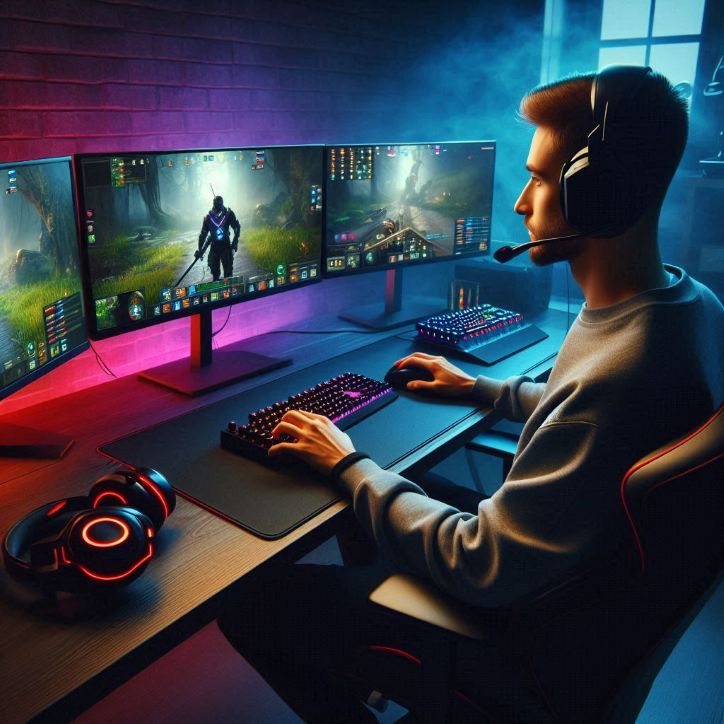
Professional esports is about reaction times, instinct, and split-second decisions. But it’s also about something far less flashy: configuration settings. Yes, the very mouse sensitivity and crosshair placement that casual players might overlook can be the hidden backbone of elite performance.
Think of it this way: a sprinter studies another runner’s stride and form just as much as a Counter-Strike 2 competitor studies another team’s DPI and sensitivity. Teams at the highest level often dissect these technical configurations to gain an edge, much like how a boxer analyzes an opponent’s footwork. Esports organizations, such as the Mongolz, publish detailed breakdowns of pro setups to help others understand what mechanical choices their players make and why they work. Research shows that analyzing these configurations helps aspiring players build solid foundations for training and improves mechanical consistency.
You’ve probably watched a football coach point at a play diagram for what feels like hours. In esports, analysts pore over dashboard configurations with that same intensity. What mouse DPI yields better control? What crosshair size reduces missed shots? These are part of the competitive discipline that separates casual players from those who compete professionally, according to data from HLTV.
Settings as a Form of Training Analysis
Config setups are the quiet ritual before the storm. A player’s sensitivity and field of view are not just random numbers saved in a menu; they are muscle memory anchors. Research indicates that certain settings help players build consistent motor patterns, making reflexive actions smoother and more reliable under pressure. For example, MouseDPAnalyzer notes that a slight DPI adjustment can improve accuracy by minimizing unnecessary hand movement.
Pros sweat the tiny details because consistency breeds confidence. A slight shift in DPI can change how far a mouse must travel to complete a 360-degree turn. It feels like the difference between gliding through a turn on a bike and completely misjudging it. At 300 frames per second in a tournament, that difference can determine a kill or a loss.
Just like traditional athletes tweak training plans based on competitors’ routines, esports players compare configurations across individuals and teams. Understanding how others balance speed and precision gives them clues about strengths and weaknesses in rival approaches.
Why Professional Teams Compare Settings and Playstyles
Esports is serious business, and mastering the nuanced worlds of DPI, sensitivity, and crosshair setups is another step toward victory.
Professional teams analyze settings to find trends and outliers. Some players prefer a lower DPI for finer aim control, while others like a higher sensitivity to pivot quickly. Expert Beacon note that many top FPS players cluster around similar DPI ranges because it optimizes the balance between fast turning and micro corrections.
Discussing settings is like debating running shoe brands on a track team: everyone has an opinion, but objective performance data supports each choice. When a coach says, “We studied ten runners’ strides and chose the best drills,” it mirrors what top esports organizations do with their setups.
Settings analysis also extends to playstyle implications. A rifler with high sensitivity might be aggressive in tight quarters, while a player with lower sensitivity might excel at precise shots from distance. Patterns like these influence tactics, role assignments, and team compositions. It’s not just about winning individual duels; it’s about orchestrating them strategically. Research from ScienceDirect shows that detailed preparation improves team performance and decision-making during high-pressure matches.
The Role of Preparation in Esports Success
Esports preparation is intense. Teams spend hours plotting how to counter rivals’ tactics, much like basketball squads review opposing defenses. Analysts may note, “This player peaks in the same spot every round” or “That one has a unique sensitivity ratio,” and these insights guide strategy. For deeper context on the role of strategic mastery in competitive gaming beyond just mechanical skill, see The Unseen Strategies Behind Mastering Game Rules in League of Legends Esports. Experts note that understanding opponents’ habits allows teams to anticipate and counter plays more effectively.
Subtle choices in crosshair styles can also make a significant difference. Some pros choose thicker lines for better visibility, while others prefer minimal lines to avoid visual clutter. These decisions affect visual focus during clutch moments. Moments like these become discussion points for scrims and practice, similar to a pitcher studying a batter’s stance.
It’s common to hear players joke that they spend more time adjusting settings than actually playing. Yet this obsession is strategic, not quirky, and shared across elite esports competition.
Conclusion: Small Tweaks for Big Wins
Configuration analysis in esports is training disguised as tech talk. Just as traditional athletes study rivals’ habits and equipment, esports competitors break down setups to refine their craft. Whether it’s DPI, sensitivity, or crosshair choices, these details shape playstyles that define success at the top level. By comparing mechanical setups and understanding the thinking behind them, teams build preparation routines that push the competitive edge. Deep dives into opponents’ play preferences and settings are as much a part of championship prep as sweat sessions, drills, and strategy reviews.
Esports is serious business, and mastering the nuanced worlds of DPI, sensitivity, and crosshair setups is another step toward victory.


